

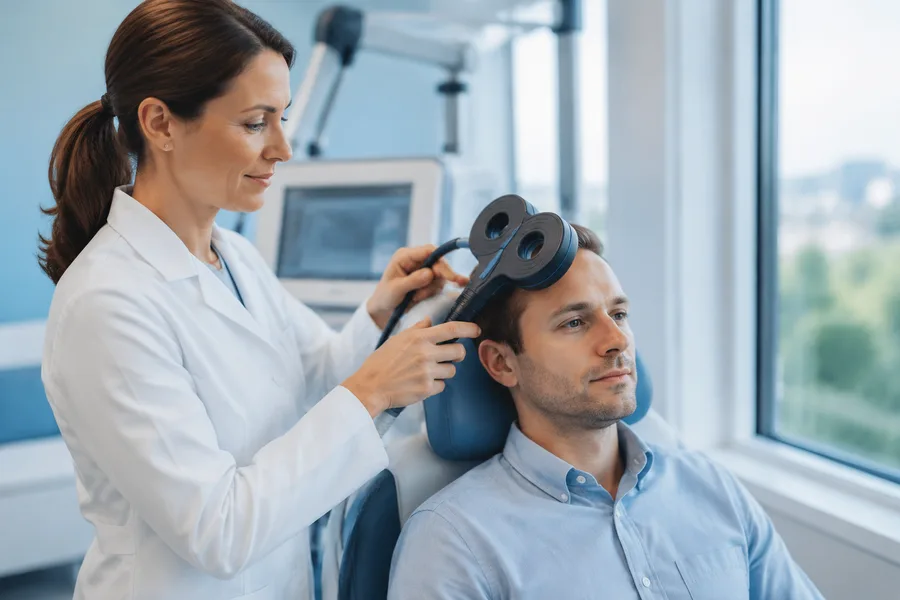
Neurostimulation (rTMS and tDCS)
Non-invasive brain stimulation under strict, evidence-based protocols, always as a complement to a structured model.
What it is
Neurostimulation applies non-invasive brain stimulation techniques when they are clinically indicated. At IDENTA it is always used under strict, evidence-based protocols and as a complement to the other interventions, medication included. It is never used as a treatment on its own.
Whether it is indicated is decided after the integrated assessment and within a structured plan, with defined goals and follow-up of the results.
Who it is for
It may be considered as a complement when:
- The clinical picture justifies it after the integrated assessment
- The aim is to reinforce other interventions in the IDENTA Model
- There is an evidence-based indication for the specific technique
Techniques we use:
- Repetitive transcranial magnetic stimulation (rTMS)
- Transcranial direct current stimulation (tDCS)
How it works
Clinical indication
After the integrated assessment, we determine whether there is an evidence-based indication.
A defined protocol
We set the protocol, the goals and how long the sessions will run.
Supervised sessions
We apply the technique non-invasively and under supervision, with safety checks in place.
Measuring results
We assess the response at regular intervals and adjust the plan.
What you can expect
- A responsible indication: we only use it where it adds clinical value.
- A non-invasive procedure, built into your treatment plan.
- Follow-up of results, rather than the promise of a single fix.

This information is provided for general education. It does not replace an individual medical assessment and is not a diagnosis. Whether any intervention is appropriate is decided after the corresponding clinical assessment.
Frequently asked questions
Do rTMS or tDCS hurt?
They are non-invasive techniques. They can produce mild, short-lived sensations, and they are applied under protocol and supervision.
Can neurostimulation cure something on its own?
No. It is a complement within a structured model, and its value lies in reinforcing the interventions around it.
Who decides whether it is indicated?
The indication is established medically after the integrated assessment, according to the evidence for each case.
Start with an initial assessment
Every process at IDENTA begins with listening. Request an assessment and get a structured opinion on your case.